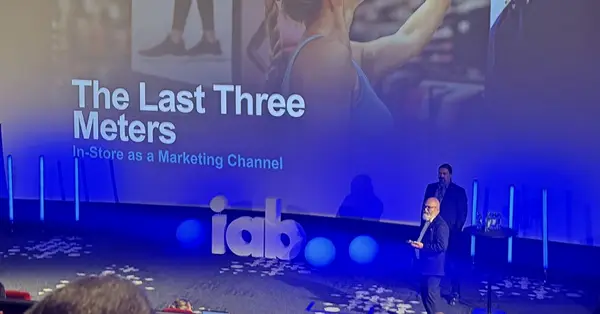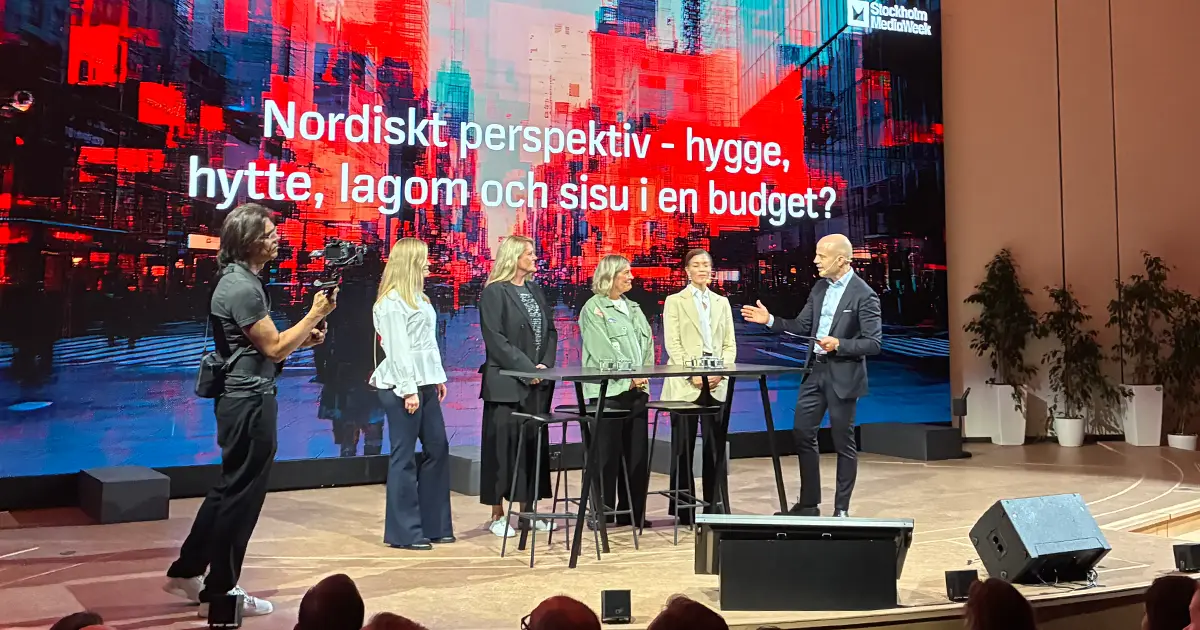
Last year, retail media was one of the prominent topics at Stockholm Media Week. This year, it was much less explicit.
Instead, much of the conversation focused on AI, trust, disinformation, creativity, attention, measurement, and how marketing is changing in an increasingly complex media landscape.
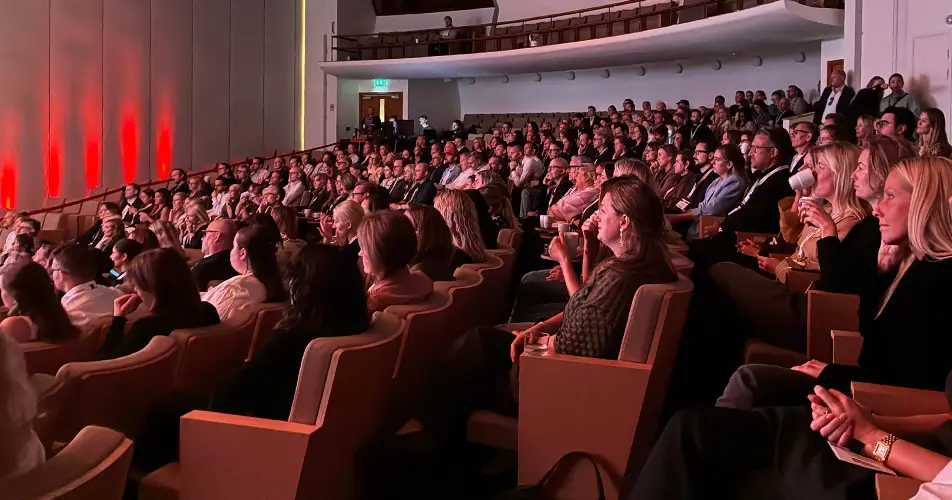
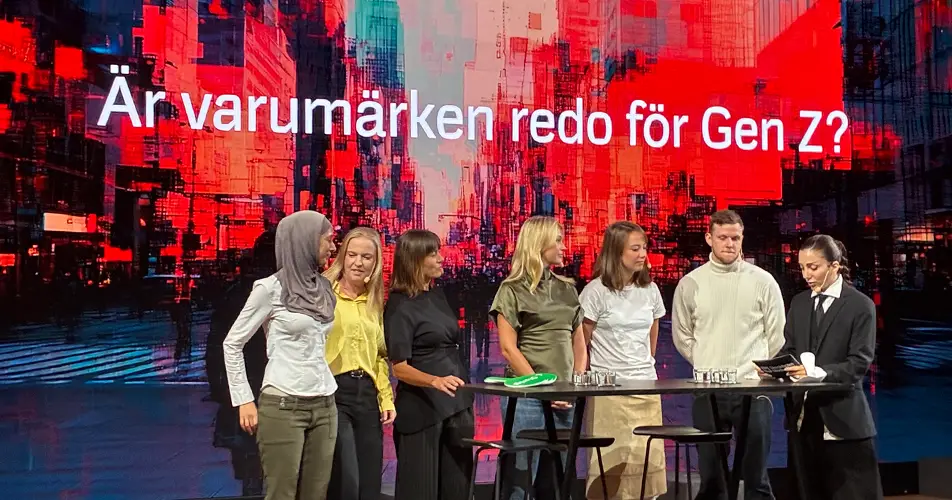
With around 700 people attending – the biggest Stockholm Media Week to date – there was a lot to take in. But as the day progressed, I found myself thinking that many of these discussions were actually highly relevant to retail media as well.
Just from a broader perspective.
When reality becomes harder to trust
The day started far away from the usual conversations about marketing.
James Appathurai from NATO described the growing hybrid threat facing our societies. Cyberattacks, bot networks, fabricated poll results, manipulated videos, deepfakes and thousands of seemingly legitimate websites can now be created and distributed at a scale that simply wasn't possible before.
AI also makes this cheaper, faster and possible in virtually any language.
One phrase in particular stayed with me:
“Nothing is true and everything is possible.”
The purpose of disinformation doesn't even have to be to make us believe one particular story. Creating enough alternative versions of reality can be enough to make us eventually question what we can believe at all.
At the same time, there is a strange asymmetry: quality journalism increasingly sits behind paywalls, while disinformation is free and can be produced in almost unlimited quantities.
Truth is expensive. Disinformation is free.
This is obviously a much bigger societal issue than marketing. But it also says something about the media environment in which both consumers and brands now operate.
And somewhere during that discussion, I started thinking about my own corner of that world.
What happens when we can produce almost anything?
AI returned as a topic throughout the day.
Emma Frans used an analogy I liked. Just as we need to keep using our bodies when technology makes life easier, we need to keep using our brains. A moving walkway can help us move forward – but we still benefit from walking on it.
In another discussion, roughly the same idea was expressed rather more bluntly:
“A fool with a tool is still a fool.”
And during the conversation about attention came another good piece of advice:
“AI second.”
Think first. Then use AI.
Being able to produce 100 LinkedIn posts instead of ten doesn't mean the world needs the other 90.
The same applies to retail media. AI, data and automation give us tremendous opportunities to create, target and optimise communication.
But more content doesn't automatically mean more relevant content. Technology should help us make communication better – not simply produce more of it.
Has marketing become too robotic?
Tom Goodwin asked the question directly:
“Is marketing broken?”
We have more data, more KPIs, more automation and personalisation – and now generative AI and AI agents on top of it all. The risk is that marketing itself becomes increasingly robotic.
Goodwin told us that earlier that day he had bought a Toblerone at the airport because of an ad he remembered from 1993.
Try putting that conversion into a traditional attribution model.
It was a humorous example, but the point is important. Not all marketing works immediately, and not all impact can be understood through the next click or transaction.
That became particularly interesting when Johan Öhlin from Coop later showed how they had worked consistently and long-term with their brand. One of the messages was that media's effect on long-term sales is at least as important as its short-term effect.
The result? Coop could show that it had gained market share for the first time in three years.
That is a useful reminder for those of us working in retail media too.
Retail media has a tremendous opportunity to connect communication to sales and actual transactions. But that doesn't mean we should reduce retail media to performance marketing alone.
The store is also a place for brand building, inspiration, discovery and customer experience.
One Nordic market – or several?
Another discussion that felt particularly relevant from a Craneworks perspective was about the Nordics.
We often talk about the Nordic market as if Sweden, Finland, Norway and Denmark were one market. Strategically, there are good reasons for doing so. Retailers, brands, agencies, media owners and technology providers increasingly operate across borders, and a strong proposition should be able to scale across the region.
But execution is local.
Languages differ. Media markets differ. Retail structures, levels of maturity and consumer behaviours differ. Communication that works in Helsinki may need a different approach in Stockholm, Copenhagen or Oslo.
AI can certainly help us work more efficiently across languages and markets. But local understanding – and often that final touch from someone who truly understands the language and culture – still matters.
Perhaps we don't need to choose between Nordic and local:
Think Nordic. Execute locally.
And we should be careful with generalisations. The differences aren't only between Nordic countries, but also between retailers, companies and people within each market.
“Be excited about new screens”
Tom Goodwin also said something that naturally caught my attention:
“Be excited about new screens.”
New devices. New screens on public transport. New screens in retail environments.
For someone working with in-store retail media, it is obviously easy to agree.
But the screens themselves are not really the most interesting part.
It's what surrounds them.
And that was when the different conversations throughout the day started to connect for me.
In-store retail media has something very valuable: reality
We live in a media world where more and more can be generated, simulated, automated and manipulated.
But walk into a store.
There is a real person.
In a real store.
Surrounded by real products.
Making real purchase decisions.
And completing real transactions.
It's real.
That doesn't mean in-store retail media is analogue or technologically simple. Quite the opposite.
Behind the communication can sit sophisticated data, AI, automation, audience targeting, dynamic content, proof-of-play and sales-effect measurement.
But all that technology operates on top of something fundamentally physical and tangible.
In-store retail media is digital technology operating in physical reality.
And perhaps that is becoming increasingly valuable.
From retail media hype to part of the media landscape
The fact that retail media was less explicitly visible at Stockholm Media Week this year than last year doesn't necessarily mean it has become less relevant.
Perhaps it is instead a sign that we are starting to move beyond the initial hype phase.
The question is no longer simply what retail media is or how quickly it is growing.
The more interesting question is how retail media takes its place in the broader media mix – alongside other channels and as a natural part of how brands reach consumers.
To get there, we still need to solve important questions around standardisation, measurement, data, buying models and scalability.
But as I left Stockholm Media Week, I was left with a rather simple thought.
In an increasingly complex and rewired media world, one of in-store retail media's greatest strengths may be something very fundamental:
Real people. Real places. Real products. Real decisions. Real transactions.
Reality matters!