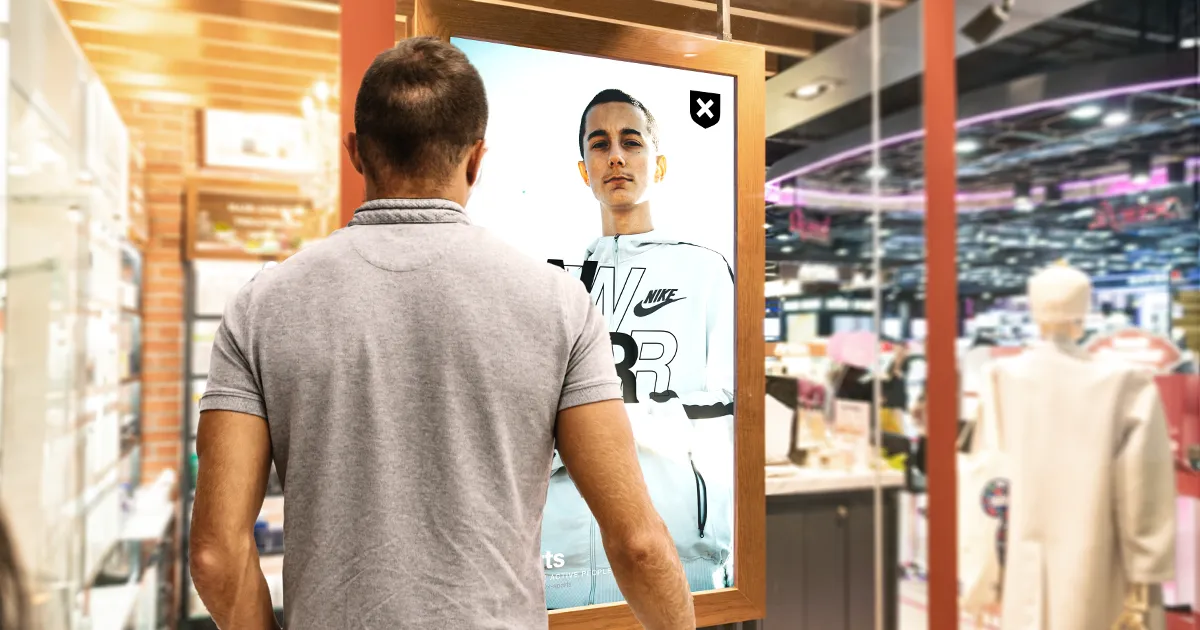
Advertisers do not need to wait for the next major product launch before adding in-store retail media to their marketing mix. A good starting point can be one product, a clear objective and a selected group of stores. What matters is defining what the advertising is expected to achieve and how success will be measured.
Planning should make use of the retailer’s own sales and shopper behaviour data. This can help identify differences in demand, select relevant stores and time periods, and evaluate campaign impact. It is worth establishing early on what data is available and how it can be used together with the media partner.
Give brand awareness a clear objective
In-store retail media should have a defined brand objective alongside its sales target.
For a new brand, this may mean building awareness and encouraging trial. For an established brand, the objective may be to reinforce existing perceptions, introduce a new product or connect the brand with new usage occasions.
A snack brand, for example, might associate its product with an afternoon at work, the start of a journey or preparing for an activity. The aim is for shoppers to recognise the brand and remember it when a similar need arises.
This makes brand recognition an important part of creative development. Packaging, brand colours and other distinctive assets need enough visibility. The message should be understood quickly and remain consistent with the brand’s wider marketing.
Creative can evolve from one campaign to the next without making the brand look different every time.
Support product trial and sales
Digital in-store displays can communicate a product benefit, demonstrate a new use case or draw attention to a new launch. When the product is available in the same store, interest generated by the advertising can turn into a purchase during the same visit.
There are also concrete examples of commercial impact. Albertsons Media Collective reported a 14% in-store sales lift in a Mondelēz Sargento Cheese Bakes campaign. Digital in-store displays were used alongside online advertising, and the impact was assessed by comparing campaign stores with separately selected control stores. [1]
One campaign result is not a growth promise for other brands. It does, however, show why advertisers should evaluate the channel in the context of their own category, audience and objectives.
Driving sales does not have to mean relying solely on promotions. Advertising can make a product benefit easier to understand, introduce a new use occasion or simply give shoppers a reason to try the product for the first time.
The opportunity is also not limited to products sold by the retailer. A non-endemic brand can use the store environment to build awareness and consideration among relevant shoppers, provided that the advertiser is a good fit for the retailer’s audience and environment. In those cases, measurement also needs to be designed differently. [2]
Think beyond the first campaign
In a continuous model, in-store retail media has a defined role in the marketing plan, a dedicated budget and a regular process for reviewing results.
Continuity does not mean running the same ad in every store every day of the year. Visibility can be adjusted around seasonal demand, new product launches and commercial priorities.
A coffee brand, for example, could combine longer-term brand visibility with seasonal campaigns and new product introductions. The visual identity remains recognisable, while the message changes according to the objective and timing.
Continuity should also extend across other marketing channels. If the same campaign runs in video, social media or out-of-home advertising, in-store retail media can reinforce the message close to the product. The creative still needs to be adapted for the store environment: the message should be easy to understand quickly and the product easy to recognise.
Each campaign should also be designed to answer a specific question.
The first campaign might compare two different creative approaches. The next could refine timing or expand an approach that has performed well. Results are easier to interpret when too many variables are not changed at the same time.
This is how advertisers begin building their own knowledge of what works.
Reliable execution is part of media quality
Advertisers need to be able to trust that campaigns run in the agreed locations, at the agreed times, and that delivery can be verified.
That is why the reliability of the screen network and software, screen placement, maintenance and reporting are all part of media quality.
Advertisers should understand how campaign scheduling, targeting, monitoring and issue resolution are handled. Screens, software, data and content need to work together as one system.
For products sold in the store, availability also matters. The message and timing of the campaign should be aligned with where the product is sold and when it is available to shoppers.
Measure brand awareness and sales separately
When the objective is to grow both brand awareness and sales, the two need their own measures.
A sales report does not tell you how awareness has developed, and an ad appearing on a screen does not prove that a shopper noticed or remembered it.
Brand research can track measures such as awareness, advertising recall and consideration. Incremental sales measurement, meanwhile, requires a comparison with how sales would likely have developed without the advertising.
Measurement should therefore be planned before the campaign begins. This ensures that the necessary baseline data and comparisons are available when results are reviewed.
Future investment decisions should also consider costs and margin. The objective is not simply to generate the highest possible campaign sales, but to create profitable growth.
Start now, but build for the long term
The first campaign does not need to answer every question.
It needs to provide enough information to understand how in-store retail media works for the brand and what should happen next. Strong-performing approaches can be expanded. Weaker creative, timing or targeting choices can be adjusted.
In-store retail media should already be part of the planning for the next marketing cycle.
The value of getting started is that advertisers begin building their own evidence on how the channel performs. That knowledge can then be used to improve creative, refine investment and build both brand awareness and profitable sales growth over time.
Sources
[1] Albertsons Media Collective. Case Study: Converting Reach into Revenue with In-Store Activation.
[2] IAB Europe. Endemic, Near-Endemic and Non-Endemic in Retail & Commerce Media.
Read also
Retail Media Without Data Is Not Retail Media
How to Build a Growing and Scalable Revenue Stream from In-Store Retail Media
How In-Store Retail Media Earns a Permanent Place in Brand Media Plans